From the tree to the bowl takes many steps……..
Fell the Tree
It all begins with the tree - preferably a large, old one that is unfortunately at end of life due to dying from drought or disease, or being a risk itself (too close to the house or power lines or from being a fire hazard).


Cut the wood into blanks
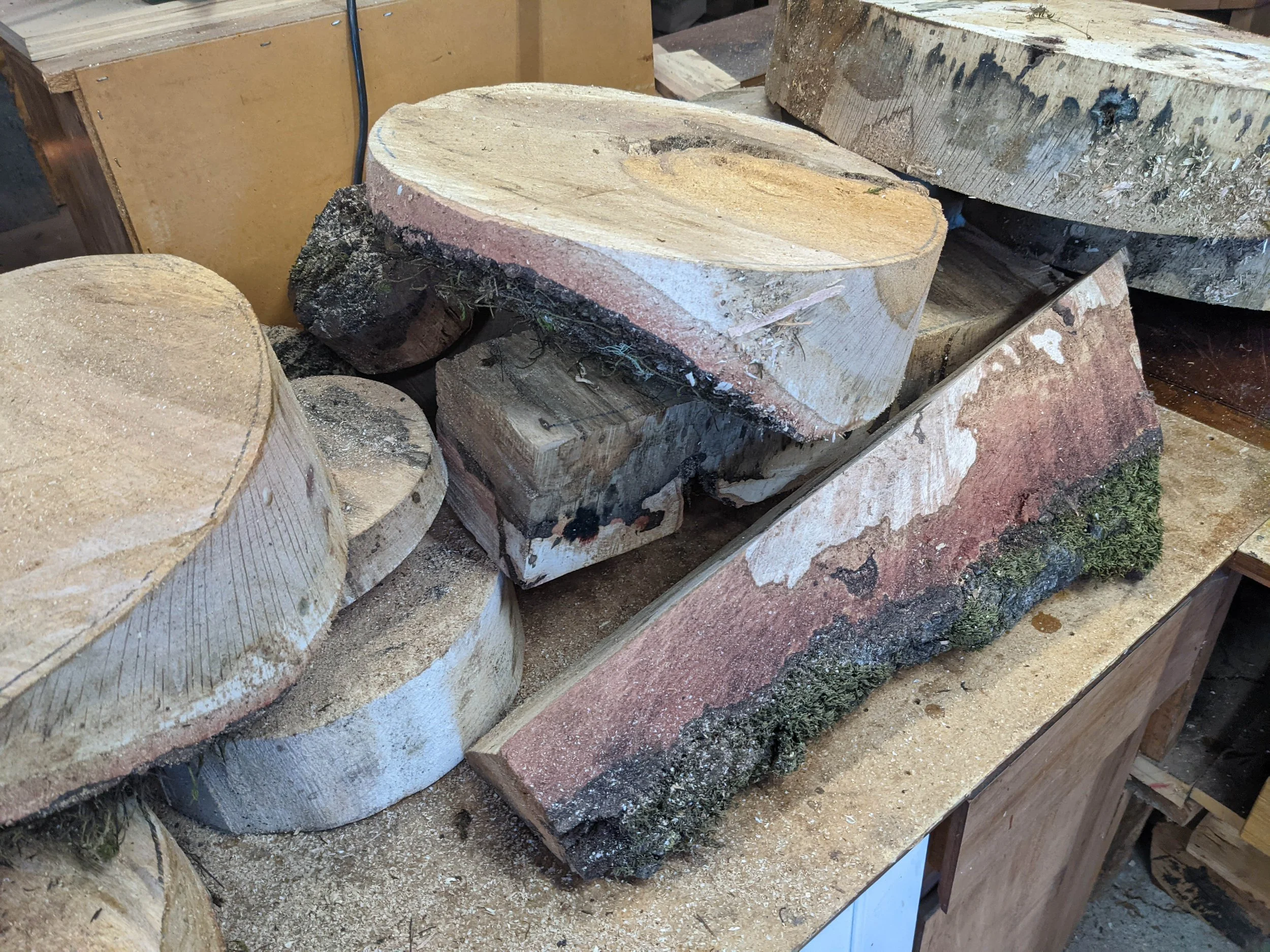
Once the tree has been cut down safely, it is time to create the wood blanks (the raw shapes to be turned later). The wood is first sliced, preferably at least 6 inches thick or as large as possible. The pit (the center of the tree) is removed, due to its tendency to crack during the drying process.

Band-saw the blanks
Round wood blanks are easier to turn than square ones, so the next step is to use the band saw to achieve this rounded shape of the blanks.

Rough-turn the blanks
Rough turning the blanks into desired shapes will reduce the drying time significantly. However, if processing a larger tree, skipping this step saves time initially. Although the unturned, larger blanks will take much longer to dry, it does allow more flexibility later to decide on shape and purpose of the final bowl.
Boil the Madrone blanks
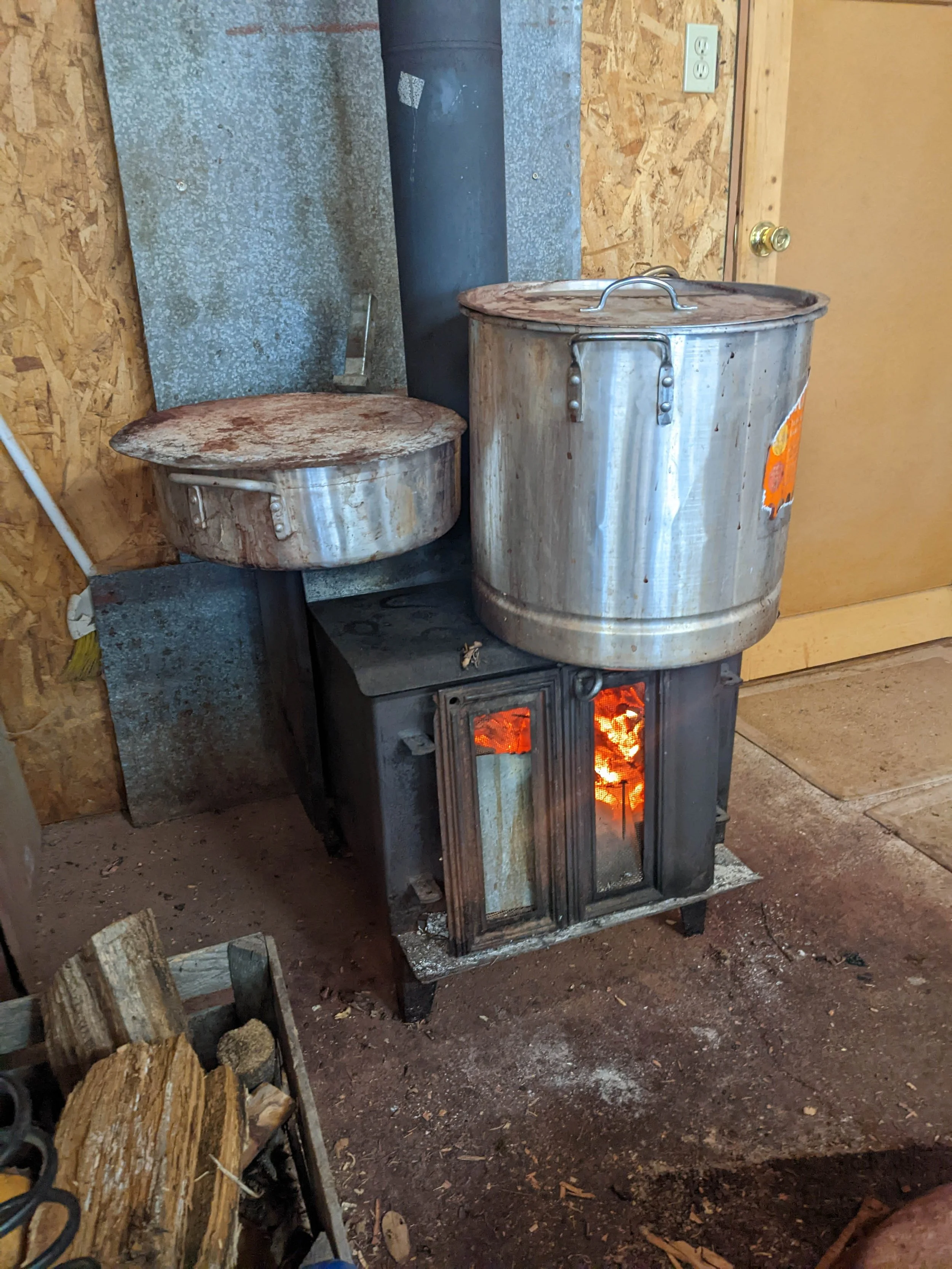
To master Madrone, you must first surrender it to the cauldron. Because the timber is born saturated—retaining a staggering 60% water content—it will inevitably shatter if left to dry by air alone.
The solution is a transformative half-day simmer. By boiling the wood on a stovetop, you release the deep-seated internal tensions that cause cracking. This "cooking" phase is the essential trade secret of the specialist; it stabilizes the fibers, neutralizing the wood's volatility and preparing it for the lathe.
Seal and dry the blanks
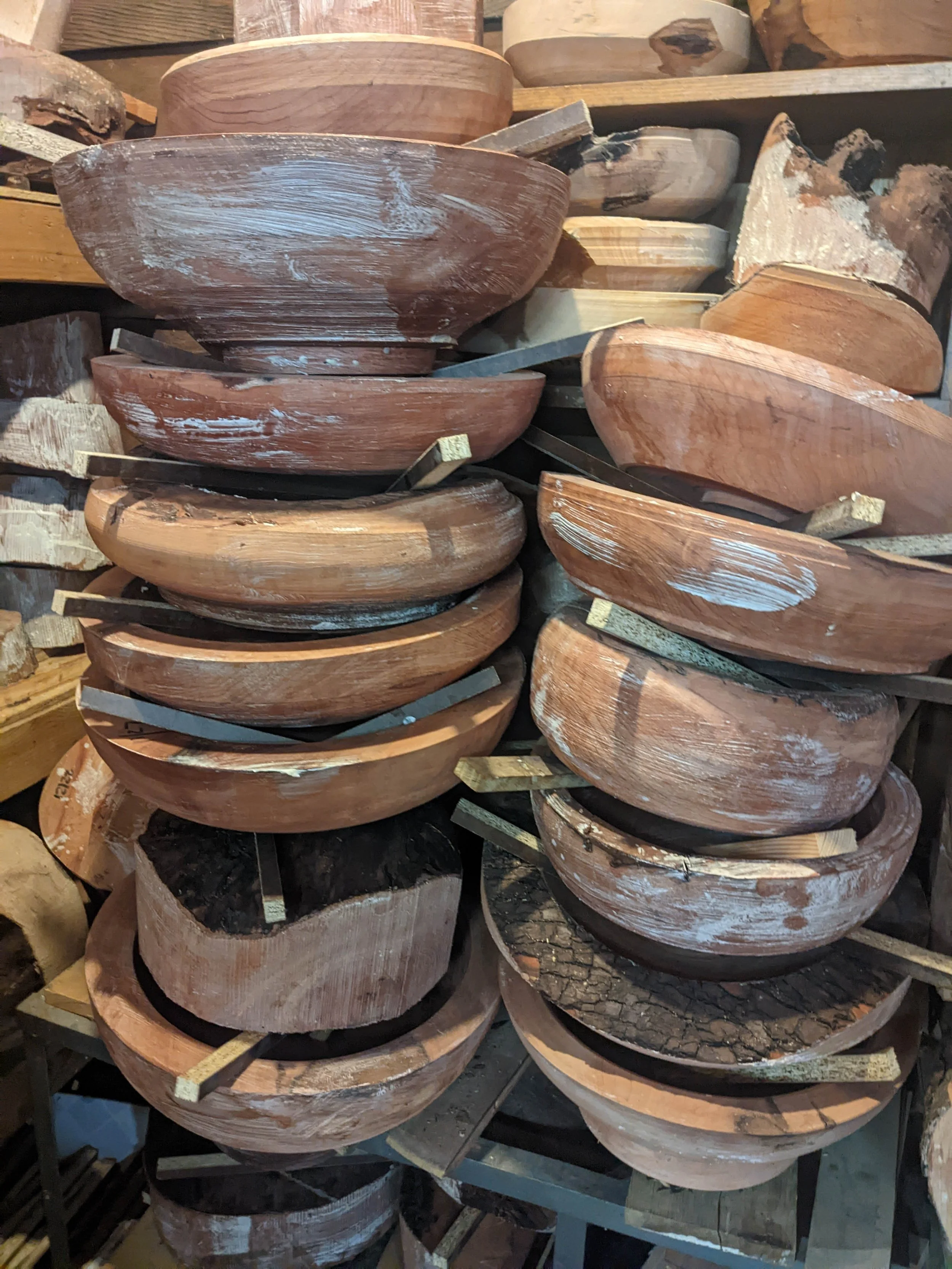
After sealing the blanks with commercial or home-made wood sealer, they must be stacked in a suitable place to slowly dry.
Conditions have to be monitored: too dry air and/or warm temperatures will accelerate drying and cause cracking, too moist unventilated air will cause mold and discoloration.
Drying the wood can take from a few months to several years, depending upon the wood type and size.
